Beaverton Wine Cellars · Services

Custom Wine Walls in Beaverton

Beaverton Wine Cellars builds custom wine walls in Beaverton: bottle storage at reach-in depth, set into a dining-room, kitchen or living-room wall instead of a separate room. A climate-controlled wall is a cellar in miniature, with insulated glass doors, a sealed cabinet and its own cooling; a display wall without cooling is open racking for bottles in rotation.

We design and install wine walls throughout Beaverton and in Aloha, Raleigh Hills, West Slope, Cedar Mill and Bethany, including homes with no basement or spare closet to give up.

Request a wine wall quote

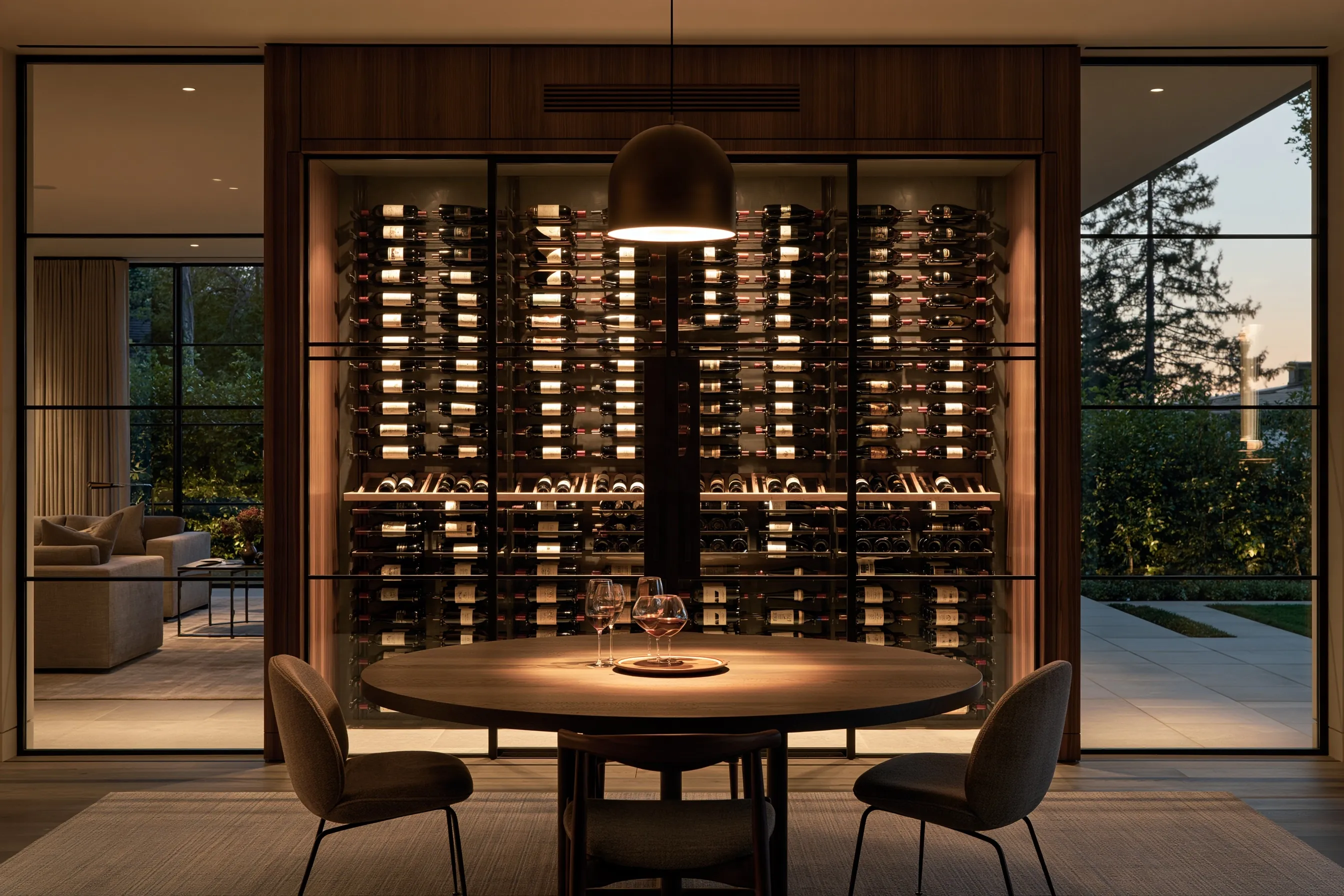
Dining room at dusk with a floor-to-ceiling wine wall behind black-framed glass and a walnut surround above a round table

Custom wine wall options

Climate-controlled wine walls

Behind its insulated glass doors, a climate-controlled wall is a shallow, sealed enclosure kept at cellar temperature. Some companies, Cave a Vin among them, build refrigerated wine walls off site and then install them; others construct them in place as part of the millwork. In both cases the doors, seals and cooling are what separate storage from display.

Display wine walls without cooling

An open, label-forward display makes the bottles part of the décor, at the cost of room temperature and room light. Because Wine Spectator says wine stored above 70°F ages too fast, this kind of wall works best for what you will drink within a few months, with longer-term bottles kept cooler.

Kitchen and dining-room wine walls

Built into cabinetry, a wine wall can divide kitchen and dining areas. Placement matters: a wall beside an oven, cooktop or dishwasher picks up heat that raises the cooling load, and a wall in direct sun exposes bottles to UV, which Wine Spectator warns can prematurely age wine.

Racking for wine walls

Racking choice is partly about display and partly about weight. Label-forward metal pegs show off individual bottles, wood cradles or shelves take mixed formats like magnums, and the two can share one wall. A full wall weighs a lot, so the racking is fastened to studs or added blocking rather than to drywall alone.

Cooling a wine wall

A wine wall’s enclosure is small but mostly glass at the front, so its load comes largely from the doors and the room around it. The cooling choices mirror a larger cellar: a self-contained unit needs space and ventilation for its exhaust, while ducted and split systems move the compressor and its noise elsewhere. The manuals reviewed for this site require or offer a drain line or condensate pump and specify dedicated or adequately sized circuits. Under Oregon guidance new permanent wiring needs an electrical permit, issued in Beaverton by the city’s Building Division.

Wine wall or wine fridge?

A wine cooler is an appliance with a steady temperature, and Wine Spectator notes some models are intended for serving. A built-in wine wall belongs to the house: sized to the wall and the collection, with storage-grade cooling and insulated glass. The bar it is built to meet is Wine Spectator’s idea of a cellar, room or cabinet, for ageing over the long term, held near 55°F, humidity-controlled and shielded from light.

Wine walls where there is no spare room

Not every Beaverton home has a basement or a closet to spare. Across the Portland metro, the 2019 American Housing Survey counted crawl spaces under 58.8% of occupied single-family homes and full or partial basements under 26.5%, more than two to one. For a home without a lower level, a wine wall in the dining room or along a kitchen run brings cooled storage into the main floor without giving up a room.

Frequently asked questions

How is a wine wall different from a walk-in cellar?

The difference is depth and how you reach the bottles. A wine wall stores them about an arm’s length deep behind doors, while a cellar is somewhere you walk into. Walls suit homes short on floor area; walk-ins hold more and leave space for big formats and a tasting counter.

Does a wine wall need cooling?

Only if it is for keeping wine. A display wall at room temperature suits bottles you will drink soon; storage for months or years needs a sealed, cooled enclosure.

Can a wine wall go in a kitchen?

Yes, ideally away from heat sources. Appliances, sun and a warm room all add load, and CellarPro notes that glass and uninsulated surfaces push the load beyond its standard tables, so the cooling is sized for the actual spot.

Request a wine wall quote

Point us to the wall, whether in the dining room, the kitchen or a living area, give a rough bottle count, and add the property address. We'll get back to you soon with an estimate or any questions we have. Estimates are free and there's no obligation.

Call (971) 265-8177

Call (971) 265-8177